Oct ‘25 1-to-1 Wiseletter (Sir Francis Bacon)
In October's 1-to-1 Wiseletter, we'll be looking at a quote from Sir Francis Bacon, the Renaissance philosopher and an early progenitor of the scientific method.
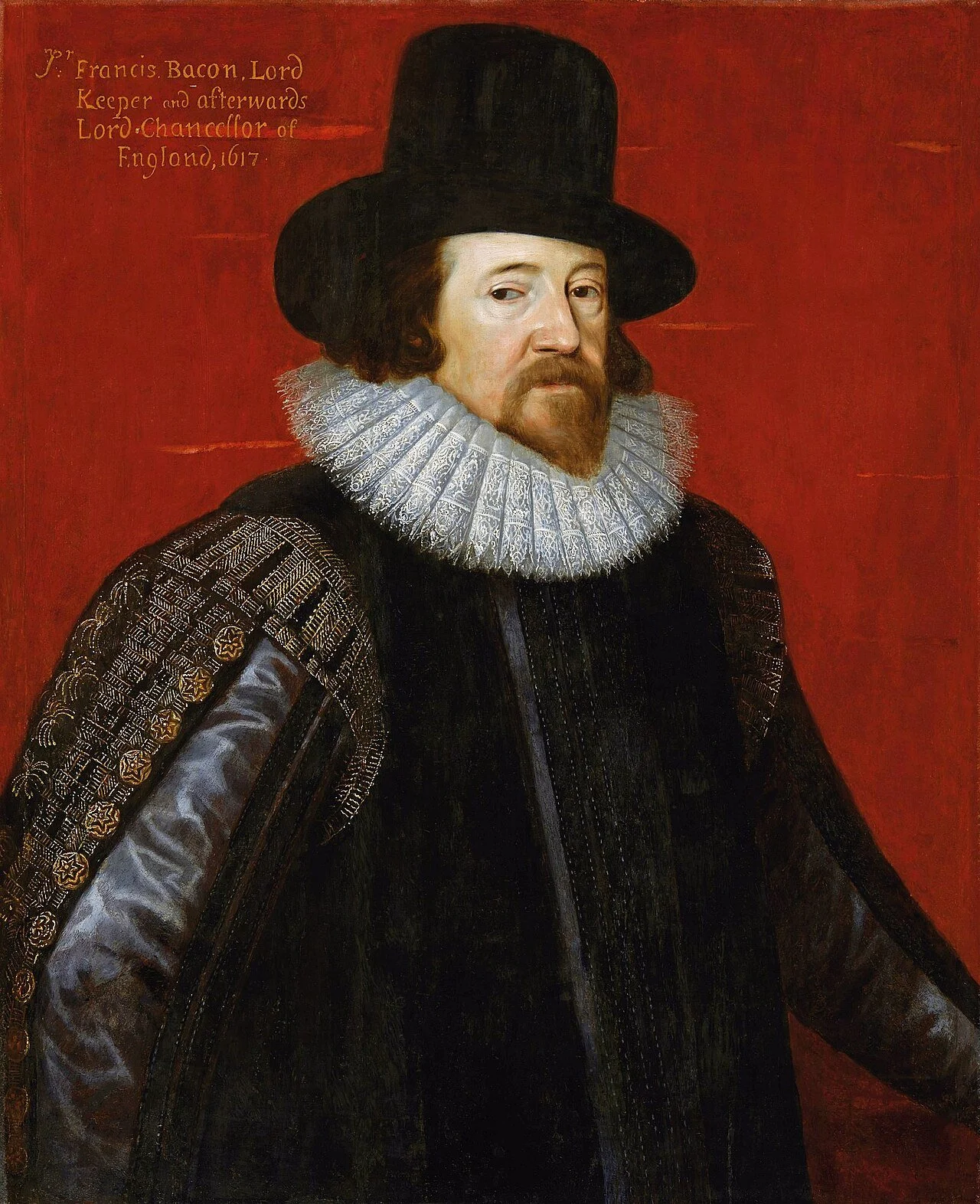
Sir Francis Bacon
Quote
A little philosophy inclineth man’s mind to atheism; but depth in philosophy bringeth men’s minds about to religion.
I found this quote when I was verifying a saying attributed to Werner Heisenberg, the early 20th century quantum physicist: "The first gulp from the glass of natural sciences will turn you into an atheist, but at the bottom of the glass God is waiting for you."
Turns out no one can find him saying that. He did say, however, that though science is unassailable in its own domain, "I have never found it possible to dismiss the content of religious thinking as simply part of an outmoded phase in the consciousness of mankind...in the course of my life I have repeatedly been compelled to ponder on the relationship of these two regions of thought, for I have never been able to doubt the reality of that to which they point."
Bacon and Heisenberg both wrestled with the single greatest problem facing the spiritual health of modern man: the divorce of science and theology.
And I say divorce because science (the West's modern version, not its original philosophical form that emerged out of Greek pre-Socratic thinking in the 7th century BC), was born from theology during the 13th century AD as a result of the eucharistic contemplations of the medieval monk, St. Thomas Aquinas. Aquinas applied Aristotelian analysis to the transubstantiation (the transformation of bread at Christian mass into God's flesh), a phenomenon that had always been taken for granted by his predecessors. This was, more or less, the moment that modern science was born.
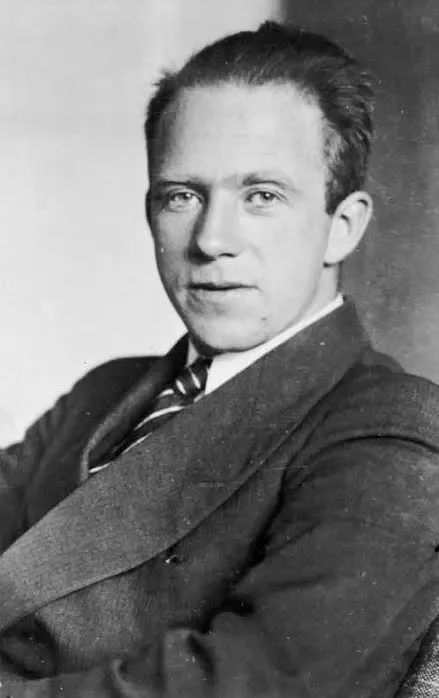
Werner Heisenberg
Rather than taking the world for granted, Aquinas used reason to understand it. But reason can only get us so far thought Roger Bacon, a contemporary of Aquinas'. We must push further and verify our reasoning with experimentation. And so over the next five centuries the scientific method was developed and refined by subsequent thinkers in the West.
But it wouldn't be until the Enlightenment era (17th/18th centuries), the Age of Reason, that science would mature enough to part ways from its theological father. This departure was the inevitable result of the insistence of theologians that the core myths of the Christian religion were historical facts and events. The moment they made this mistake they opened up the core elements of their myths to scientific inquiry. How exactly, a scientist naturally asks, could a virgin give birth?
The business of science is to understand nature and history, which are the world of facts and events. Religious myth, on the other hand, is an image of eternity, which is the negation of time and place. Ontological myths as a general rule aren't factual or event-based, they're metaphorical. The word metaphor means to transfer. The function of a myth is thus to transfer or jump human consciousness beyond the world presented as nature to a state of reality unconditioned by words and thought.
The examination of the record of this world by word and thought is done by science and theology. Both are treatments of this world; one a pseudo-religion, the other a pseudo-science. Misguided theologians, instead of allows their myths to perform their proper function, yanked them down into the world of objective facts of the historical and scientific order and destroyed them in the same way that scientific analysis does.
For example, to say that the Incarnation of God, the central mystery of Christianity, took place in Judea around 4 - 6 BC involving a particular woman and her particular son, instead of letting that story serve its proper function as a metaphor for the creation of the world, sets that event and its characters at a distance from everyone who didn't live in Judea at that time. The incarnation is best stated in metaphysical terms.
Here's what that would look like: the eternal Self abandons infinitude and becomes finite as, broadly, every-thing in the universe, and, more narrowly, as a human being. The virginal essence of the Queen of Heaven has nothing to do with sexual virginity. It's a reference to matter (or Mary) in its immaculate, untouched, virginal state prior to its transformation into some-thing.
Ultimately, the reconciliation of science and religion will come by way of a shared metaphysical language. Heisenberg's Quantum Mechanics may be the beginnings of that language.
QUESTION
How have you squared religion and science in your own life?
Cheers,
John